What is Petit Bateau?
For more than 120 years, Petit Bateau has been accompanying every generation, from 0 to 294 months. Guided by the values of freedom, quality and sustainability, our 3,000 employees contribute every day to the brand’s international reputation and success.
Founded in Troyes in 1893, Petit Bateau is proud of its French heritage and craftsmanship, which enable us to create timeless clothing designed to last. The brand embodies a playful and joyful spirit through garments that encourage creativity and freedom of movement.
As part of our mission to connect children with nature, we are committed to becoming more sustainable. To fulfil this mission, we have made strong commitments to help drive the transformation of the textile industry towards greater well-being and increased respect for the environment.
Where are our products made?
For more than 125 years, three core values have guided Petit Bateau's everyday operations: uncompromising garment quality, maintaining part of our production and employment in France, and making our products accessible.
Part of our production is still carried out at our historic manufacturing site, the Saint Joseph factory in Troyes.
To support the brand's growth and international development, Petit Bateau has expanded its manufacturing capabilities by partnering with industrial manufacturers renowned for their expertise and craftsmanship, while continuing to invest in its production facilities in France. As part of this approach, the brand has chosen to work with trusted partners in other regions, particularly two long-standing partners in Morocco and Tunisia that have supported the Group for more than 30 years.
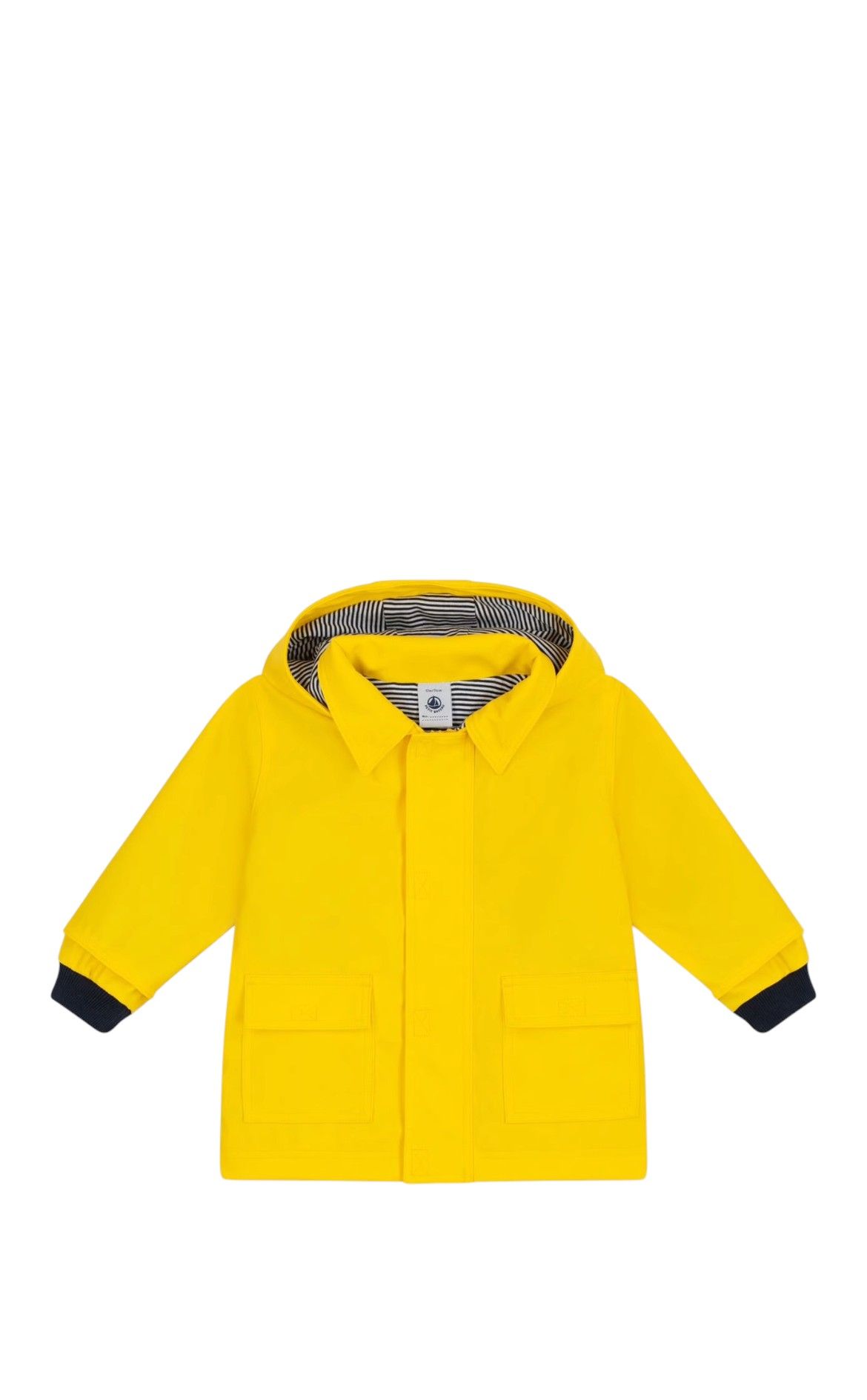
Today, 85% of our knitted garments are manufactured in three Mediterranean countries: France, Morocco and Tunisia. The remainder of our production is carried out in countries where our partners provide industrial expertise that complements Petit Bateau's own know-how, such as Madagascar, where our raincoats are manufactured.
Which materials do we choose?
We prioritise materials that combine comfort with the quality of our products while striving to reduce their environmental impact, particularly in terms of resource consumption and the use of chemical substances.
Since 2021, we have strengthened this approach by increasing the use of fibres with improved environmental performance, including organically grown cotton and recycled materials, most of which are certified according to internationally recognised standards.
Today, more than 75% of the products available in our boutiques are made from organically grown cotton yarn. Organic farming practices help limit the use of pesticides and contribute to preserving soil quality.
We also incorporate recycled synthetic materials into selected products, such as certain rainwear and swimwear, in order to reduce the use of virgin raw materials.
We prioritise the use of natural fibres, with cotton accounting for more than 85% of the fibres we use, alongside linen for selected summer products.
What is our position on synthetic fibres?
Whenever possible, we prioritise natural materials, particularly our signature fibre, cotton, which accounts for more than 90% of our collections. We therefore use very limited amounts of synthetic or man-made fibres, and only where natural fibres cannot provide the same level of quality or functionality required for the garment, such as in rainwear or swimwear.
Why do we continue to use cotton?
At Petit Bateau, we have chosen cotton for many years because it offers numerous benefits. As a natural fibre, it is soft to the touch, high-quality and comfortable to wear.
However, we recognise that conventional cotton farming has a significant environmental impact, particularly due to water consumption and the use of pesticides. This is why we have progressively transitioned our sourcing towards supply chains that meet higher environmental standards, while continuing to ensure the quality of our products.
We have chosen to incorporate GOTS-certified organic cotton into our collections. The Global Organic Textile Standard (GOTS) sets rigorous environmental and social requirements, including restrictions on the use of synthetic pesticides. Today, more than 75% of the products available in our boutiques are made from organic cotton yarn.
Animal Welfare
Whenever we use animal-derived materials, we pay particular attention to the conditions under which they are produced. We prioritise sourcing materials that comply with recognised animal welfare standards.
Accordingly, we are committed to using certified materials whenever possible, including Responsible Wool Standard (RWS) certified wool. The RWS certification helps ensure responsible farming practices and promotes high standards of animal welfare.
How are we reducing the environmental impact of our production?
We recognise the environmental impact of our manufacturing activities and have designated our Troyes facility as a pilot site to support the continuous improvement of our production practices.
Working in partnership with ADEME (the French Agency for Ecological Transition) and the Seine-Normandy Water Agency, we have developed an action plan to reduce our water consumption and greenhouse gas emissions.
By 2030, compared with our 2019 baseline, we aim to reduce water consumption by 50% at our knitting and dyeing facility in Troyes, while also reducing energy consumption by 50% across our two production sites in Troyes and our manufacturing facility in Morocco.
Achieving these objectives takes time. To support this transition, we have introduced performance measurement tools, optimised our manufacturing processes, and invested in more efficient equipment, including water-efficient dyeing machines and photovoltaic panels installed at our Moroccan production facility.
How do we select our suppliers?
Our manufacturing partners are selected through a rigorous evaluation process based on environmental, quality and corporate responsibility criteria. These standards are applied consistently to all of our partners worldwide.
Our suppliers are trusted long-term partners with whom we build lasting relationships. More than half of them have been working with us for over ten years. Our supplier selection process begins with a thorough understanding of each product's requirements, enabling us to identify partners with the expertise needed to manufacture high-quality products that meet Petit Bateau's CSR standards.
Working conditions are an integral part of our supplier selection process. Every supplier working with Petit Bateau must ensure that all employees receive at least the applicable legal minimum wage and that all forms of forced or compulsory labour are strictly prohibited.
We also rely on independent third-party organisations to audit our suppliers and verify compliance with their social commitments. Some of the world's leading organisations, including Sedex, audit and assess our suppliers' manufacturing facilities to help ensure that our products are produced under legal, ethical and humane working conditions.
Every supplier signs the Groupe Rocher Code of Business Conduct and renews its audits every three years in accordance with recognised assessment frameworks such as SMETA and the EcoVadis platform.
How do we manage our inventory and unsold products?
Today, 100% of the fabric offcuts generated at our Troyes factory are recycled in France.
In France and across Europe, 100% of our unsold products—approximately 200,000 items each year—are donated to local charitable organisations, including Dons Solidaires, L'Association du Don en Nature, the French Red Cross, and Secours Populaire.
More broadly, we strive to minimise unsold products by significantly reducing our production volumes each season. For example, we reduced the number of product references and materials produced for our Summer 2022 collection.